
Achilles Tendon Pain
Understanding Achilles Tendon Pain: causes, risks & how a podiatrist can help
Around 30% of people who experience Achilles tendon pain don’t regularly participate in sports or structured exercise. In fact, Achilles tendon issues are extremely common in adults over the age of 35. As we age, the collagen fibres within the tendon naturally change, becoming stiffer, less elastic, and slower to adapt to the stress we place on them.
For many, the first sign of trouble is a sharp, aching pain in the tendon when getting out of bed, often causing a noticeable limp for the first few minutes of walking. As the tendon "warms up," the pain eases, but the underlying issue remains.
Why Achilles Tendon pain happens
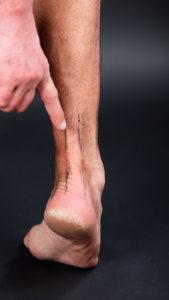
The Achilles tendon is the strongest tendon in the body, but it’s not invincible. It absorbs enormous amounts of force with every step, especially during running, hopping, hill walking, or changes in direction.
As the tendon loses elasticity over time, it becomes less efficient at storing and releasing energy. This means the muscle has to work harder, gradually increasing load and stress on the tendon fibres. Micro-tears, inflammation, stiffness, and degeneration can follow.
More about the Achilles - here
Common risk factors
Certain factors increase the likelihood of developing Achilles tendon pain:
• Gender: Research shows men are more prone to tendon issues than women.
• Increased body weight: More load through the tendon can contribute to irritation and degeneration.
• Age 30–55: This is the peak window for Achilles tendon problems because the tendon’s elastic properties naturally decline.
• Training errors: Too much too soon, abrupt changes in activity, or inadequate recovery.
• Footwear issues: Old or unsupportive shoes, incorrect style for your foot type, or drastic changes in heel drop.
• Surface + environment: Hard or uneven surfaces, cold conditions, or repetitive hills.
When the tendon is healthy and springy, it can store 10–15% of mechanical energy like a rubber band, essential for running, jumping and propelling forward. When that ability declines, the tendon is more vulnerable to overload.
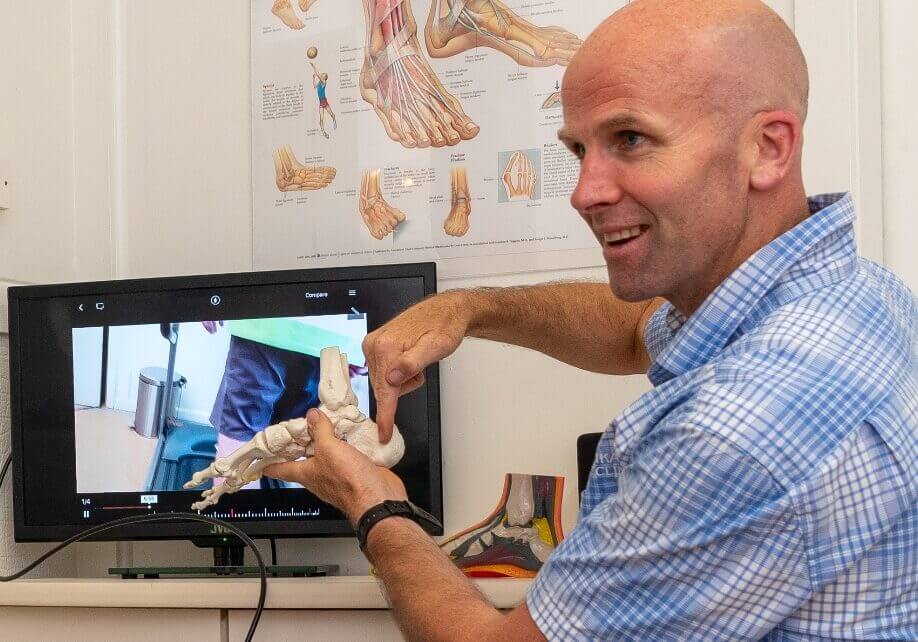
How a podiatrist can help
Achilles tendon pain rarely resolves with rest alone, and often returns if the underlying cause isn’t addressed. That’s where podiatry plays a crucial role.
A podiatrist will assess:
Foot posture, including pronation or supination
Biomechanics and gait
Calf flexibility and strength
Tendon capacity (how well your tendon handles load)
Footwear suitability
Activity patterns and training load
From there, a tailored treatment plan is developed. This may include:
- A structured strengthening program
To gradually increase the tendon’s ability to tolerate load, rebuild capacity, and reduce pain.
- Footwear recommendations
Choosing the right shoe can significantly reduce tendon strain.
- Orthotic devices
To improve foot alignment, reduce excessive load, and correct biomechanical contributors.
- Load management guidance
Helping you return to activity safely without re-aggravating the tendon.
- Manual therapy or soft tissue treatment
To improve mobility and comfort where appropriate.
Achilles tendon pain is highly treatable, especially with early intervention. With the right support, most people return to comfortable walking, exercise, and daily life without lingering stiffness.
Still in pain?
Are you feeling like you have tried everything but are still in pain?
Do you feel like you have seen every health practitioner you can about your tendon pain?
We have a track record of diagnosing and successfully treating cases that have previously proven difficult to resolve and we'd love to help you get back on your feet doing what you love.
Call us or drop us an e-mail & we'll get back to you as soon as possible to discuss your Achilles pain and some possible solutions. You can also book an appointment online.
Providing the people of Waikato with a centre of podiatry excellence

Hey guys, I have recently torn my achilles twice and have been recovered from surgery for 14 months now. I am looking to progress and resume more normal activities as in jogging/running being able to jump etc, I don’t know how much of it is a mental barrier or physical barrier. If you could get in contact with me when you get a chance that would be awesome.
Hi Corey, Thank you for the message. We can certainly help you with progressing back to your everyday activities. If you’re able to send us an email with your contact details, we can get you booked in for an appointment with one of our highly skilled Podiatrists. [email protected] or give us a call on 07 838 0003. Thank you we look forward to hearing from you.