
Heel Spurs
Heel Spurs and Heel Pain: What you need to know
Heel pain is one of the most common reasons people seek podiatric care, and heel spurs are often blamed. In fact, heel spurs are present in approximately 20–40% of the population. However, the presence of a heel spur does not automatically mean pain, and this distinction is crucial for effective treatment.
What is a Heel Spur?
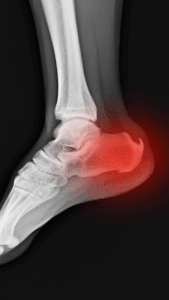
A heel spur is a bony growth that forms on the underside of the heel bone (calcaneus). It develops gradually over time in response to repeated stress, traction, or loading through the plantar fascia or surrounding structures.
Interestingly, many people have heel spurs visible on X-ray but never experience any symptoms. This is why heel spurs alone are not always the true cause of heel pain. Factors such as the size, shape, length, and angle of the spur, as well as how the foot functions during walking or running, all influence whether it becomes problematic.
 This is why imaging must always be interpreted in combination with a clinical assessment, not in isolation.
Heel Spurs vs Plantar Heel Pain
Heel spurs are commonly associated with plantar heel pain (often called plantar fasciitis), but they are not the same condition. In many cases, the pain comes from irritation or degeneration of soft tissues, not the spur itself. Treating the underlying cause, rather than focusing solely on the X-ray finding, is the key to recovery.
Treatment options for Heel Spur related pain
At Waikato Podiatry, we take an evidence-based, individualised approach to heel pain. Treatment may include:
Targeted stretching programmes to reduce tension through the plantar fascia and calf
Foot orthoses to improve load distribution, reduce stress on the heel, and increase function
Footwear modifications to provide better support and shock absorption
Strapping or taping techniques to offload painful structures
Acupuncture, where appropriate, to assist with pain management
Extracorporeal Shockwave Therapy (ESWT) – one of the strongest evidence-based treatments for stubborn heel pain, with reported success rates of around 75%
The good news?
With the right diagnosis and treatment plan, up to 88% of heel pain cases can be successfully treated. Early intervention significantly improves outcomes, the longer heel pain persists, the more challenging it can become to resolve.
Don’t ignore heel pain — get onto it early.
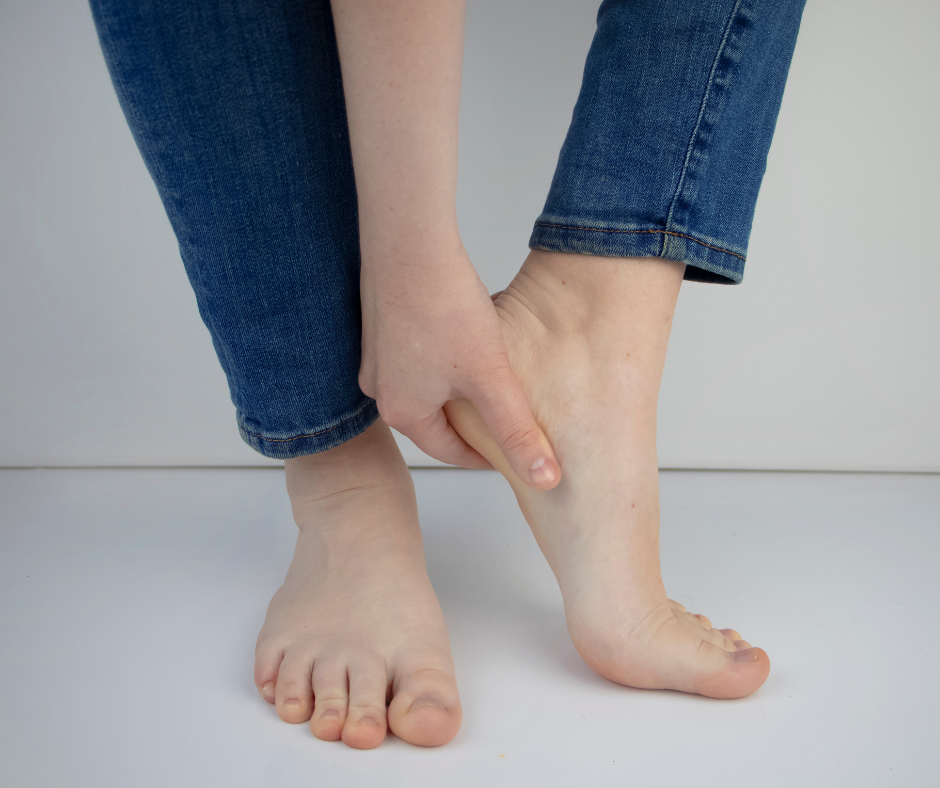
Achilles Tendon Attachment Pain (Insertional Achilles Pain)
Heel pain doesn’t only come from underneath the foot. The Achilles tendon, which attaches to the back of the heel, is another common source of discomfort. Pain at this attachment point can be caused by overuse, tight calf muscles, biomechanical overload, or inappropriate footwear.
At Waikato Podiatry, we approach Achilles-related heel pain from multiple angles:
Reducing pain and improving daily function using stretching, strapping, footwear changes, and orthotic support
Addressing contributing factors, such as training errors, load management, foot posture, and calf strength
Modifying activity and footwear to allow healing while maintaining safe movement
Progressive rehabilitation, rather than complete rest, where appropriate
Despite what many people are told, there is a lot that can be done for Achilles attachment pain. Research shows that with the right management, both pain levels and functional capacity can be significantly improved.
Get expert help for heel pain
Heel pain is rarely caused by one single factor. That’s why a thorough assessment and tailored treatment plan are essential.
If heel pain is limiting your work, sport, or everyday life, talk to the team at Waikato Podiatry Clinic.
We can help you live an active, healthy life again.
Still in Pain?
Are you are feeling like you have tried everything but are still in pain?
Do you feel like you have seen every health practitioner you can about your heel pain?
We have a track record of diagnosing and successfully treating cases that have previously proven difficult to resolve and we'd love to help you get back on your feet doing what you love.