Moon Boots and Children: What Every Parent Needs to Know
If your child has recently been prescribed a moon boot following a foot or ankle injury, you're likely relieved that something is being done to help them recover. Moon boots - those chunky, protective walking boots designed to immobilise and offload an injured area - are a common and sometimes very appropriate treatment tool. But when it comes to children, there are some important things every parent should understand before accepting a moon boot prescription without question.
At Waikato Podiatry, this is something we feel strongly about. Not because moon boots are inherently wrong - they absolutely have their place - but because we've seen firsthand the consequences of prolonged or unnecessary use in young patients.
The problem with long-term Moon Boot use in children
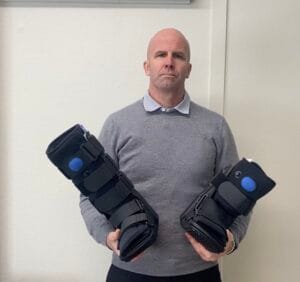
Moon boots work by restricting movement and offloading pressure from an injured area. For short-term use following certain injuries, this can be exactly what's needed. However, when children wear moon boots for extended periods, a range of secondary problems can develop that are often overlooked at the point of prescription.
These include ankle stiffness from prolonged immobilisation, muscle atrophy as the surrounding muscles weaken from lack of use, and tendon weakness that can take considerable time to rehabilitate. In active children and teenagers who are used to running, jumping, and playing sport, these secondary effects can be surprisingly significant - and can actually extend their overall recovery time rather than shortening it.
Beyond the physical effects, there's also the very real impact on a child's social and emotional wellbeing. Sport and physical activity are central to childhood and adolescence. Missing out on training, matches, and the simple ability to keep up with peers can affect confidence, mental health, and relationships - particularly for children who are deeply involved in competitive sport.
The diagnostic challenge: fractures vs growth plates
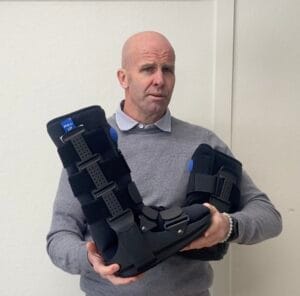
Here's where our concern goes deeper. In children and adolescents, the skeletal system is still developing. This means that growth plates - the areas of growing tissue near the ends of long bones - are present in ways that simply don't exist in adult patients.
The challenge is this: differentiating between a fracture and a growth plate injury on imaging is not always straightforward, even for experienced clinicians. Growth plate injuries can mimic fractures on X-ray, and vice versa. Over the years, we have seen several cases where children have been incorrectly diagnosed and subsequently spent prolonged, unnecessary periods in moon boots - with all the associated consequences of immobilisation - when a different treatment approach would have been far more appropriate.
This isn't about apportioning blame. It's a genuinely difficult diagnostic area. But it does highlight why a thorough, specialist assessment is so important before committing a child to weeks of immobilisation.
What we recommend
If your child has been prescribed a moon boot, we would always encourage you to seek a podiatric assessment before or alongside any treatment plan. Our role isn't to override clinical decisions made by other healthcare professionals - it's to ensure that the full picture is being considered, and that your child receives the most appropriate care for their specific situation.
At Waikato Podiatry, we are experienced in assessing paediatric foot and ankle injuries. We take the time to conduct a thorough examination, review any available imaging, and consider the unique characteristics of a developing skeletal system. If a moon boot is genuinely the right tool, we'll tell you. And if it isn't - or if the duration of use needs reviewing - we'll tell you that too.
We also understand the importance of keeping children active wherever it is safe to do so. Where immobilisation is necessary, we work to minimise the secondary effects and support a structured return to activity as soon as it is appropriate.
Moon boots are a useful clinical tool - but they are not a one-size-fits-all solution, particularly in children. If your child has been given one and something doesn't feel right, or if they've been wearing it for weeks without clear improvement, please come and see us.
Getting the diagnosis right from the beginning makes all the difference to how quickly and fully your child recovers.