
Precision strength testing with digital dynamometry
Are you recovering from an injury and wondering if your strength is truly back to 100%?
We’re highlighting one of the biggest shifts in modern podiatry: moving from guessing to knowing, using advanced clinical technology like digital dynamometry.
From estimation to accuracy
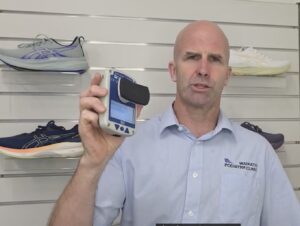
In the past, testing muscle strength was a bit like a tug-of-war. We’d ask you to “push against my hand” and make a clinical judgement based on how it felt. While experienced clinicians could get a good sense of strength, it was still subjective.
Today, we’ve replaced that guesswork with a handheld Digital Dynamometer.
This small but powerful device allows us to measure muscle strength with precision, giving us clear, objective data rather than relying on feel alone.
Why precision matters
When it comes to injury recovery, how something feels doesn’t always reflect what’s actually happening.
With digital dynamometry, we can:
- Measure exact force output in kilograms
- Identify strength imbalances between limbs
- Track progress over time with objective data
For example, your injured leg might feel “fine,” but testing may show it’s still 20% weaker than the other side. That difference is significant, and returning to full activity too soon can increase the risk of re-injury.
When do we use it?
Digital dynamometry is particularly useful during rehabilitation and return-to-activity planning. We commonly use it for:
- Achilles tendon injuries
- Plantar fasciitis
- Ankle sprains and instability
- Calf strains
- Post-surgical rehabilitation
- Overuse injuries in runners and active individuals
It’s also valuable for athletes who want to optimise performance and reduce injury risk, as well as for patients wanting to maintain strength and mobility as they age.

Understanding the “why” behind your foot pain
Strength plays a crucial role in how your body absorbs load and moves efficiently. Weakness or imbalance in muscles can place extra strain on tendons, ligaments, and joints, often contributing to pain or delayed recovery.
By measuring strength accurately, we can better understand the cause of your condition, not just the symptoms.
For example:
- Reduced calf strength can contribute to Achilles tendon overload
- Muscle imbalance around the ankle can increase instability and risk of sprains
- Weak intrinsic foot muscles can affect foot posture and load distribution
How this improves your treatment
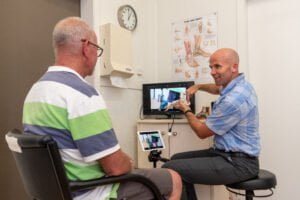
The real value of digital dynamometry lies in how it shapes your treatment plan.
Instead of general advice, we can provide targeted rehabilitation based on your specific deficits. Your exercise programme becomes more precise, more relevant, and more effective.
We can also:
- Set clear, measurable goals for recovery
- Monitor whether your rehab is actually working
- Safely guide your return to sport or activity
- Reduce the risk of setbacks or re-injury
It also gives you confidence. Rather than wondering if you’re ready, you’ll have the data to support your progress.
From “feeling better” to “being better”
One of the biggest shifts we see with this technology is mindset.
Patients often move from saying, “It feels better,” to understanding, “It is stronger, and here’s the proof.”
That clarity is powerful. It removes uncertainty and helps you make informed decisions about your recovery.
Whether you’re an elite athlete or simply want to stay active and pain-free, having the right data matters.
Digital dynamometry allows us to assess, monitor, and guide your recovery with accuracy — ensuring you’re not just feeling better, but truly ready to return to the things you love.
At Waikato Podiatry, we’re proud to bring this level of precision to our community.
Because better data leads to better outcomes, and a safer, stronger recovery. 👣
Still in pain?
Are you are feeling like you have tried everything but are still in pain?
We have a track record of diagnosing and successfully treating cases that have previously proven difficult to resolve and we'd love to help you get back on your feet doing what you love.