
A Ripple Effect: How Extracorporeal Shockwave Therapy came to Podiatry
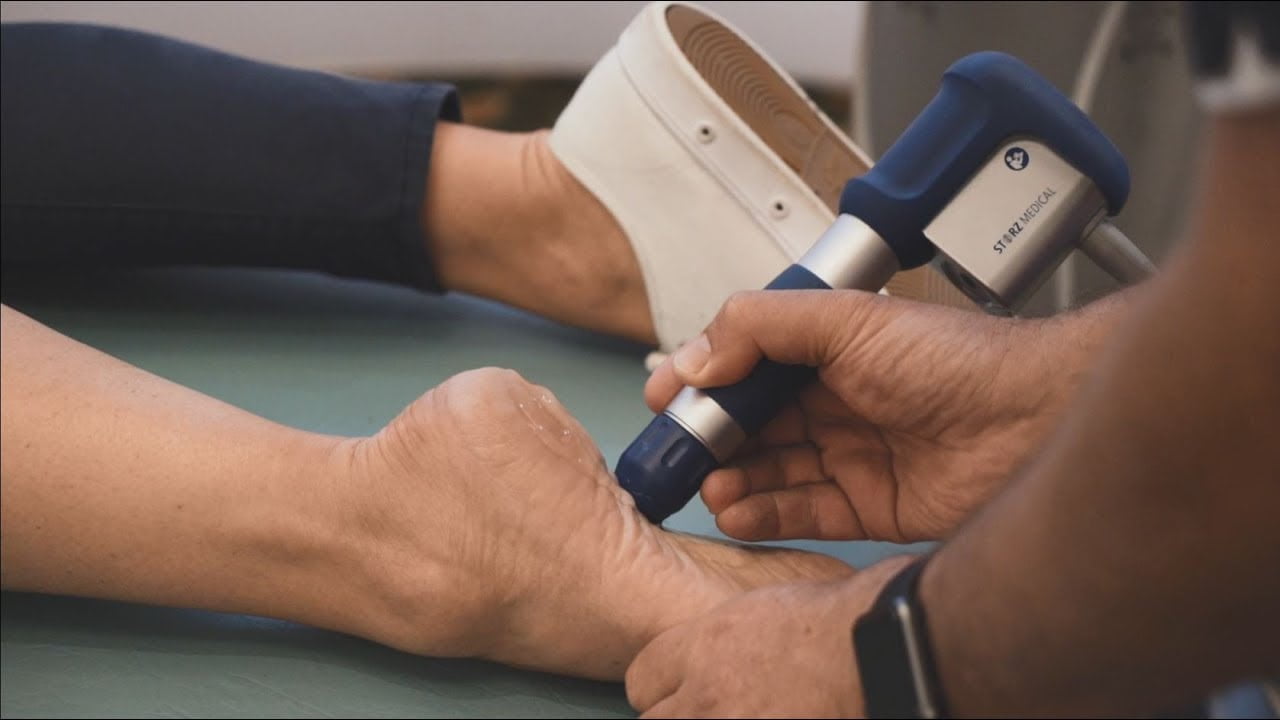
If you’re suffering from ongoing foot or heel pain, we may recommend Shockwave Therapy, also known as Extracorporeal Shockwave Therapy (ESWT). This treatment has been used successfully around the world for many years, but it’s only in more recent decades that high-quality scientific research has confirmed its clinical effectiveness for musculoskeletal conditions.
Shockwave therapy is non-invasive, non-surgical, and widely used for stubborn conditions that haven’t responded well to rest or traditional treatments.
What conditions can Shockwave Therapy help with?
Shockwave therapy is commonly used to treat a range of chronic foot and lower limb conditions, including:
Plantar fasciitis
Heel spurs
Achilles tendinopathy (tendonosis)
Other persistent musculoskeletal soft tissue injuries
These conditions often involve poor blood supply, chronic inflammation, or delayed tissue healing — areas where shockwave therapy can be particularly effective.

How does Shockwave Therapy work?
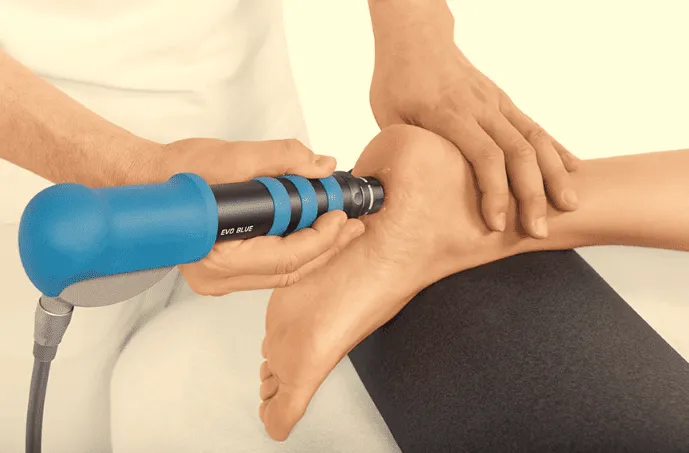
Shockwave therapy works by delivering high-intensity acoustic waves directly to the affected area. These sound waves stimulate a number of important biological responses, including:
Increased blood flow and new blood vessel formation
Stimulation of collagen production, essential for tissue repair
Reduction of chronic inflammation
Breakdown of excess calcium deposits in soft tissues
Activation of healing enzymes within the cells
Together, these effects help create an optimal healing environment, allowing damaged tissue to repair and function to improve over time.
What does treatment involve?
Each shockwave treatment session typically lasts around 10 minutes. A common treatment plan involves three sessions over three weeks, although this may vary depending on the condition and individual response.
Shockwave therapy is generally well tolerated, requires no downtime, and allows you to continue most daily activities during treatment.
A brief history of Shockwave Therapy
Shockwave therapy has an interesting medical history that dates back to the mid-20th century.
Following World War II, doctors observed that individuals exposed to underwater explosions had internal tissue damage without visible external injuries. This was the first indication that shockwaves could affect human tissue.
In the 1950s, scientists developed machines capable of producing shockwaves in a controlled way. Early laboratory research revealed that shockwaves could affect muscles, fat, and connective tissue while largely sparing bone, an accidental but important discovery.
By the 1970s, research expanded significantly. Experiments using gelatin demonstrated that shockwaves could break down kidney stones without direct contact. This led to successful clinical use in urology during the 1980s.
Later in the 1980s and 1990s, researchers began exploring shockwave therapy for bone and soft tissue conditions. While intact bone showed limited response, further studies revealed that shockwaves could stimulate healing in fractures and soft tissue injuries, paving the way for its modern musculoskeletal use.
How ESWT is used today
Today, ESWT is used to trigger a biological healing response at a cellular level. By stimulating healing enzymes and improving tissue metabolism, shockwave therapy helps restart stalled healing processes, particularly in chronic conditions where recovery has plateaued.
For foot and heel pain, this can mean reduced pain, improved function, and long-lasting results, rather than short-term symptom relief.
Looking to the future
Although shockwave therapy has been used medically for decades, it remains a relatively young technology with significant potential. Ongoing research continues to explore:
New clinical applications
Optimal treatment frequencies and intensities
Condition-specific protocols
As technology advances and access improves worldwide, shockwave therapy may play an even larger role in managing chronic musculoskeletal pain and promoting tissue healing.
Is Shockwave Therapy right for you?
Shockwave therapy isn’t suitable for everyone or every condition, but when used appropriately and guided by a thorough clinical assessment, it can be an effective and evidence-based treatment option for many types of persistent foot and heel pain.
If you’ve tried rest, footwear changes, or other treatments without success, shockwave therapy may be worth discussing with your podiatrist.